
If you're a mother of a young child, you might know well the feeling of always owing something. The house, work, your partner, meals, sleep, playtime, school activities. And in the midst of all that, a voice whispers: you're not keeping up.
I want to start by saying that this voice is not a flaw in you. It usually shows up when we carry a huge expectation to do it all, as if that were possible. And guilt comes along, as if it were proof that you don't love enough. But it isn't.
The good-enough mother is not the perfect one
The term "good-enough mother" was coined by the English psychoanalyst Donald Winnicott. He said that we don't need to be perfect to offer healthy care. The good-enough mother is one who gets it right and gets it wrong, who is present and also fails, and who, by failing, allows the child to learn to deal with frustration. It sounds strange, but it's precisely in imperfection that the child finds room to develop.
When we demand perfection from ourselves, guilt becomes a constant companion. And guilt doesn't help us care better; it only tires us out. It tires us to the point where we can't be present even in the good moments, because our mind is always on what's missing.
Asking for help is also caring for your child
Many mothers feel that asking for help is a sign of weakness or that they don't love enough. But asking for help is an act of care for the child. When you allow someone else to care for your child for a while, you're teaching that it's safe to trust other people. And you're taking care of yourself, so you can continue to care for them.
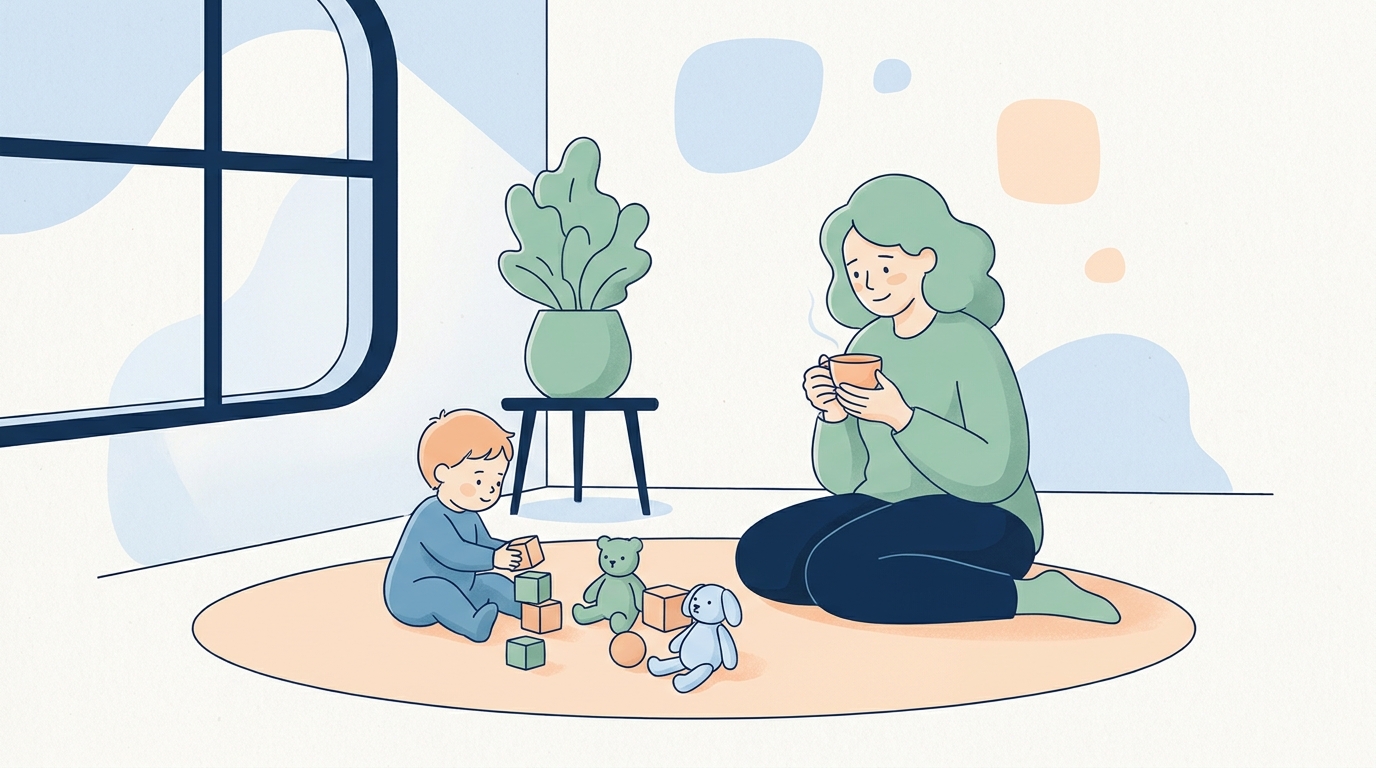
Help can be a support network: a grandmother, a friend, a neighbor, a mothers' group, a professional. It doesn't have to be grand. It can be an afternoon a week, an hour to have a leisurely coffee, a conversation that lightens the weight.
Guilt doesn't define you
Guilt is a feeling, not a verdict. It might even point to something you'd like to change, but it doesn't have to turn into a sentence that you're a bad mother. You can look at guilt with curiosity: what is it trying to tell me? Sometimes it's just repeating an old demand that isn't even yours.
If guilt has been intense and constant, and you feel it's hard to get through the day-to-day, seek help. In Brazil, CVV (188) offers free emotional support, 24 hours a day. And psychotherapy can be a space to understand what's behind this guilt and find lighter ways to live motherhood.
I don't believe in ready-made formulas or lists of tips that work for everyone. Each mother, each child, each family has its own story. But I believe that no one needs to go through this alone.
If you identified with these words, how about we talk? I'm here to listen, without judgment, at your pace. You can reach out to me for an initial conversation and we'll see together what makes sense for you.