
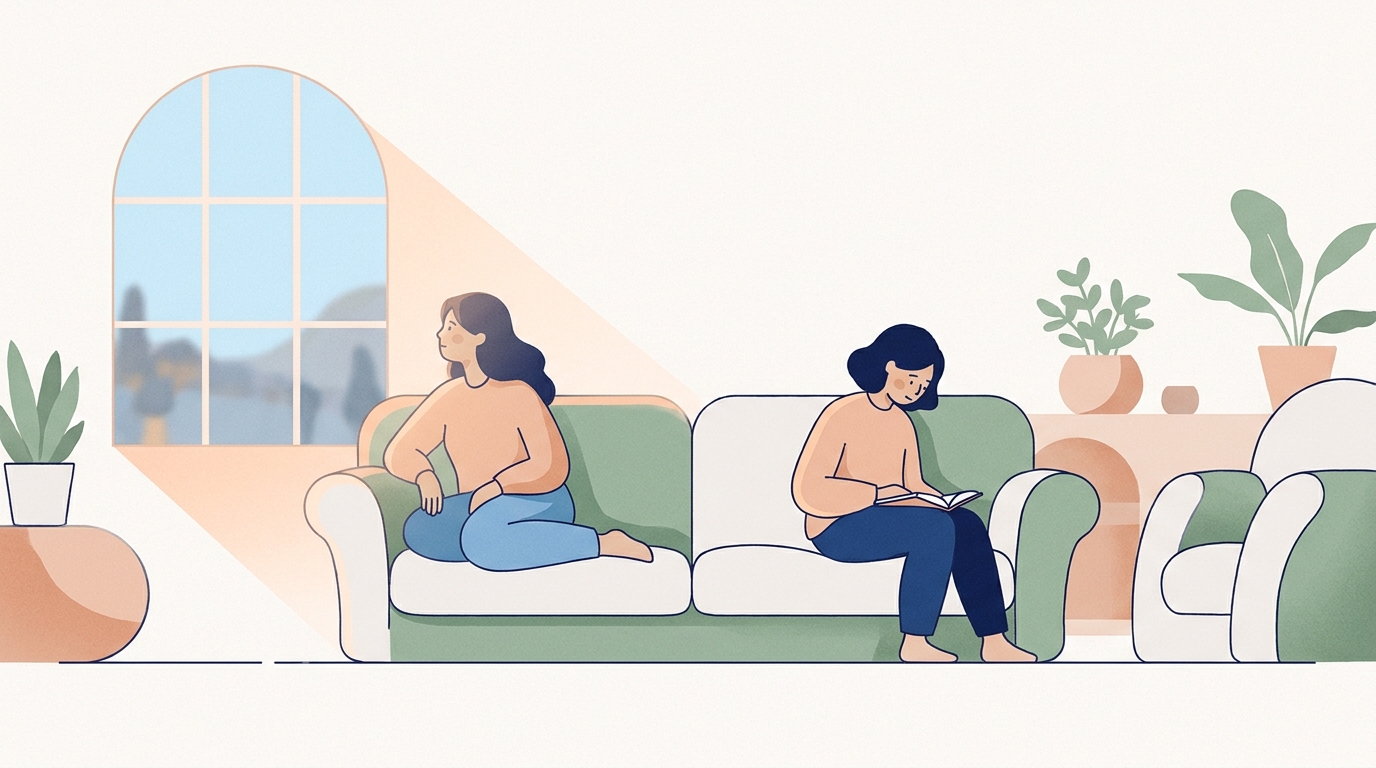
Many people come to my office talking about an old wound: the impression that a sibling was always more seen, more praised, more forgiven. Sometimes it's a small detail that repeats for years. Sometimes it's something big, like a choice your parents made that was never explained. Either way, the comparison keeps piling up.
When I talk about preference, I'm not saying parents love one child less. I'm talking about the experience of someone who felt second place. That experience is real for the person living it, even if the family story is told another way. And it's important not to rush someone to "understand the parents' side" before they can say what they felt.
Anger has a function
The anger that shows up in these cases is often treated as a flaw: jealousy, immaturity, ingratitude. I see it differently. Anger is often the way we find to say "this wasn't fair to me." When no one listens to the injustice, it doesn't disappear. It turns into sarcasm at gatherings, competition over grades, fights over small things, silent distance.
In childhood, it's common for the child who feels passed over to try to prove their worth somehow: being the best student, the funniest, the one who doesn't cause trouble. Or they give up and start acting like they don't care. In both cases, the message underneath is similar: "I need to make sure I matter here."
What often happens between siblings
- Explicit comparisons, like "why can't you be more like your brother?", that stay in memory for decades.
- Different rules for each one, with no explanation, which feeds the sense of unequal treatment.
- The sibling becoming judge of the situation, repeating at home what they learned from the adults.
- A competition no one chose, but that organizes the relationship: who is the most responsible, the most fun, the most fragile.
Over time, this dynamic can turn into distance. Siblings who barely speak, who avoid family gatherings, who feel guilty for not wanting to be close. Self-criticism also shows up: the person starts doubting their own worth everywhere, not just at home.
What helps the conversation change tone
I don't believe in recipes for solving family relationships. But some things tend to open space.
First, naming what you feel without accusing. Instead of "you always preferred him," something like "when this happens, I feel invisible." It's harder to answer, and for that very reason it may be more heard.
Second, separating what's old from what's current. A lot of the anger that shows up today is a response to something that repeated for years. Recognizing this helps keep from throwing the whole load into a single argument.
Third, remembering that understanding your parents' context doesn't obligate you to erase your own pain. You can understand that they did what they knew how to do and, at the same time, say that it hurt.
Comparison between siblings doesn't have to be a sentence. It can be a subject.
When to seek help
If anger is taking over your thoughts, if there are frequent fights, if the person isolates or feels they can no longer be with family, that deserves care. It's not a sign of weakness. It's a sign that something important is asking for space.
In situations of intense suffering or crisis, seeking help is a form of care. In the US, you can call or text 988 to reach a local crisis line, free and confidential, at any hour.
In my office, this theme comes up often, in individual sessions and in women's groups. It's not about deciding who's right in the family, but about looking at what this story built in each person. Sometimes the first step is just being able to say out loud: "I felt less."